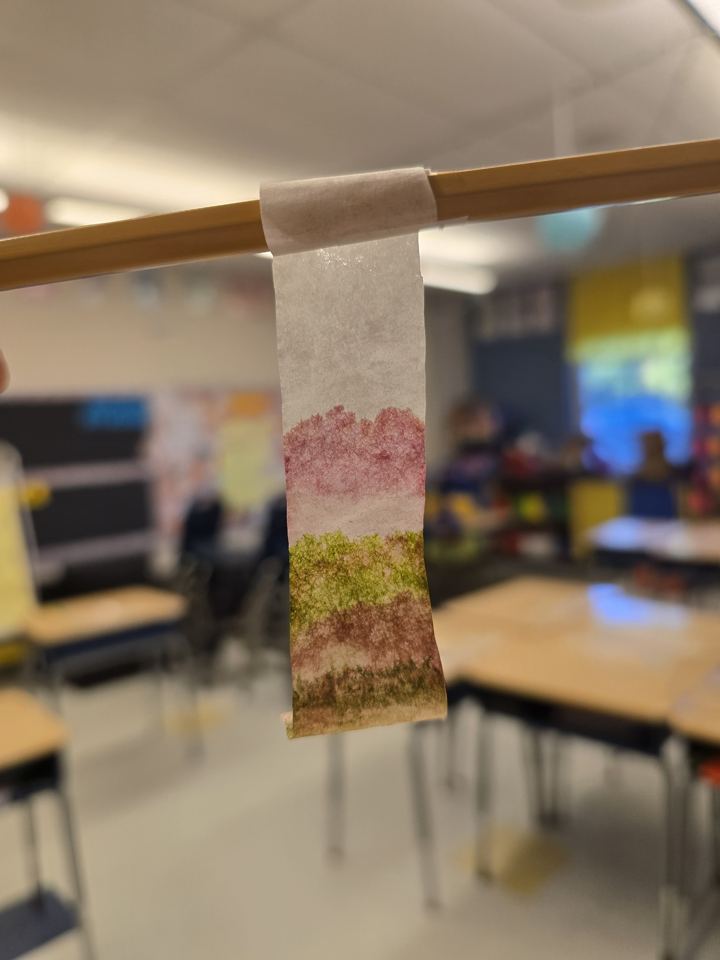
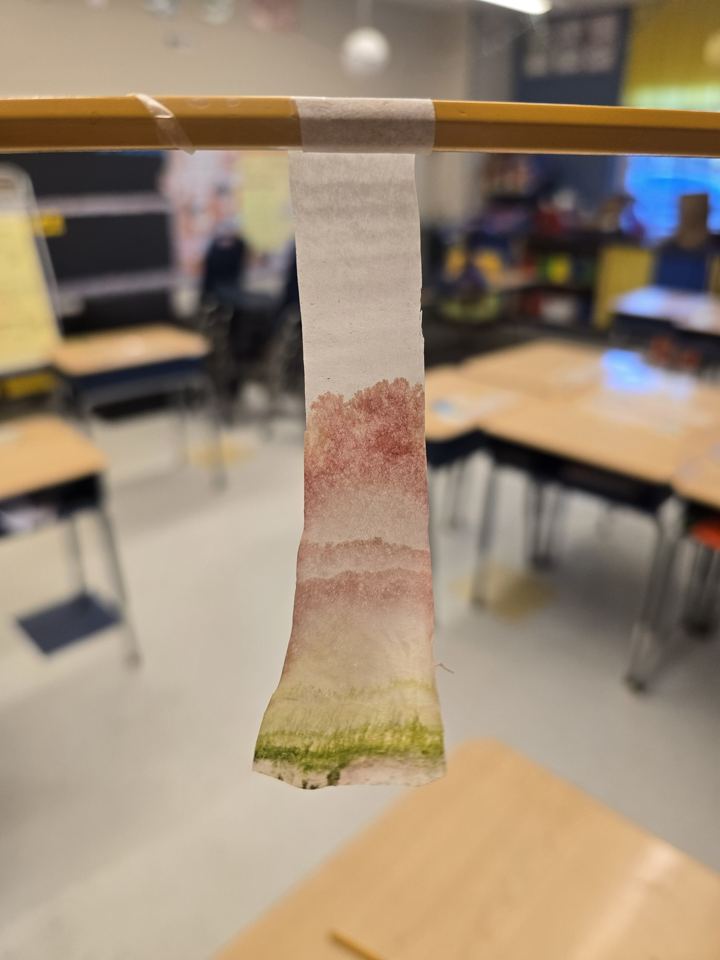
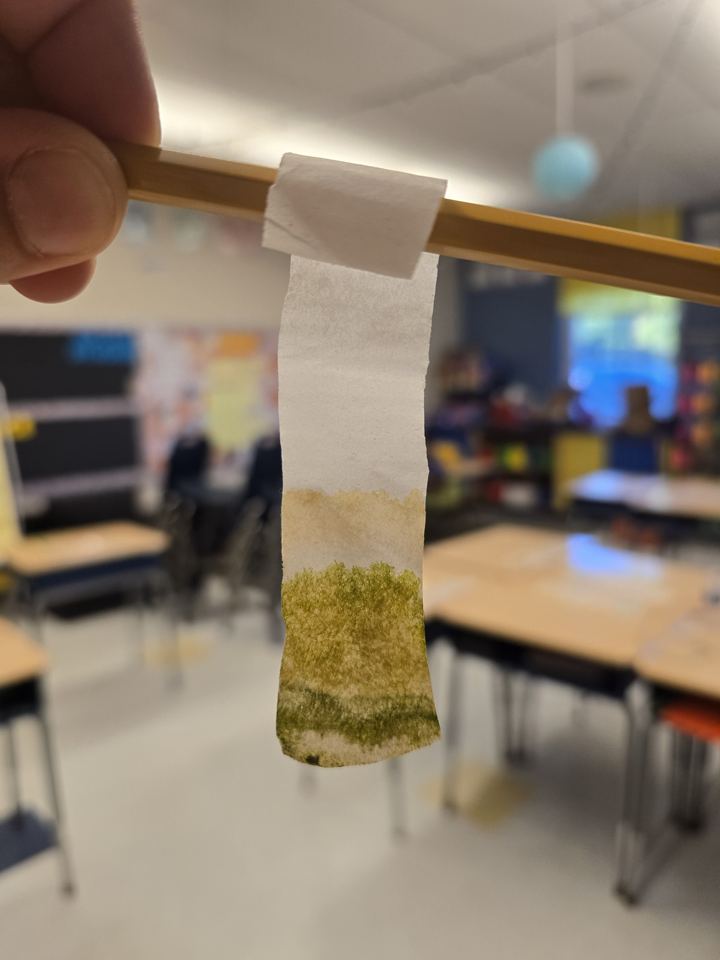
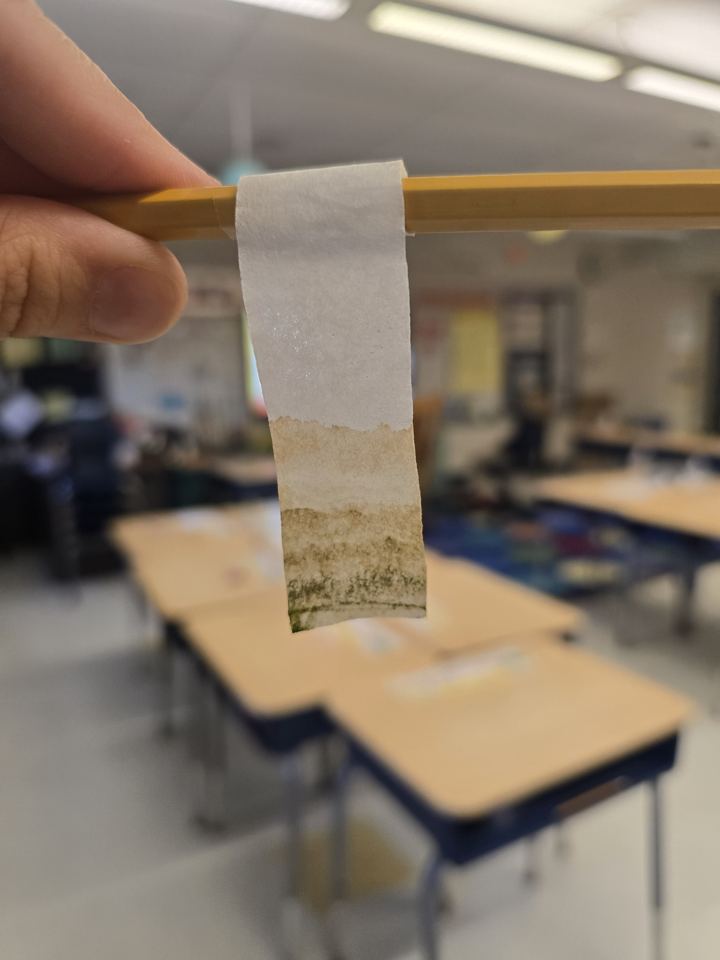
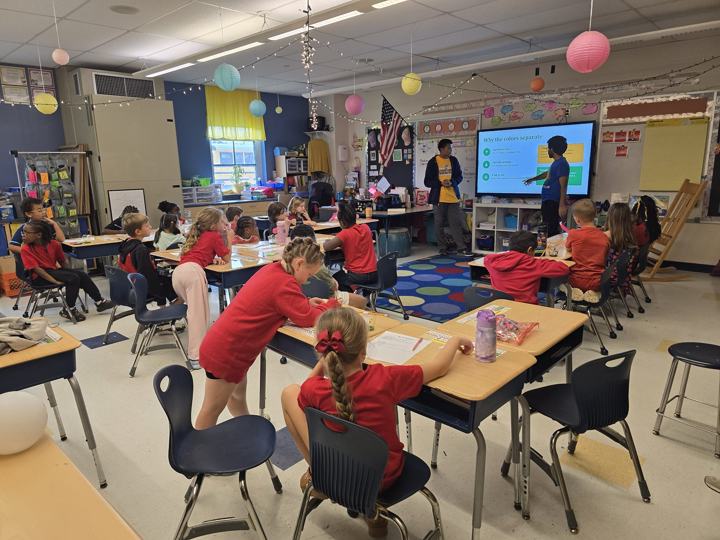
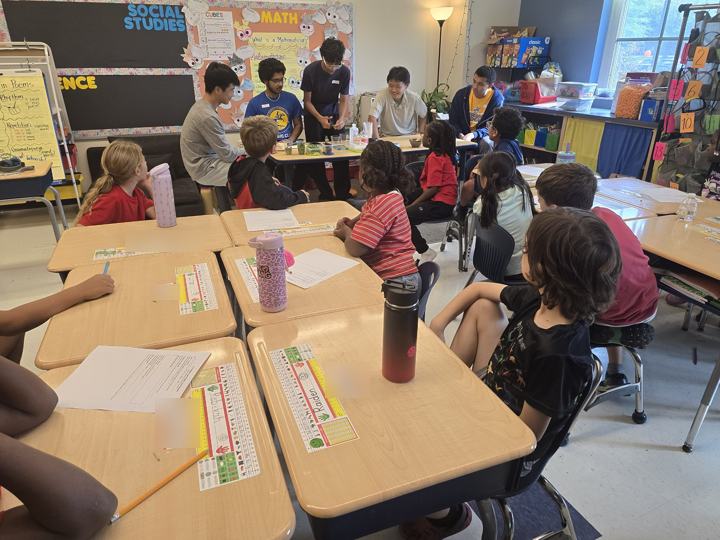
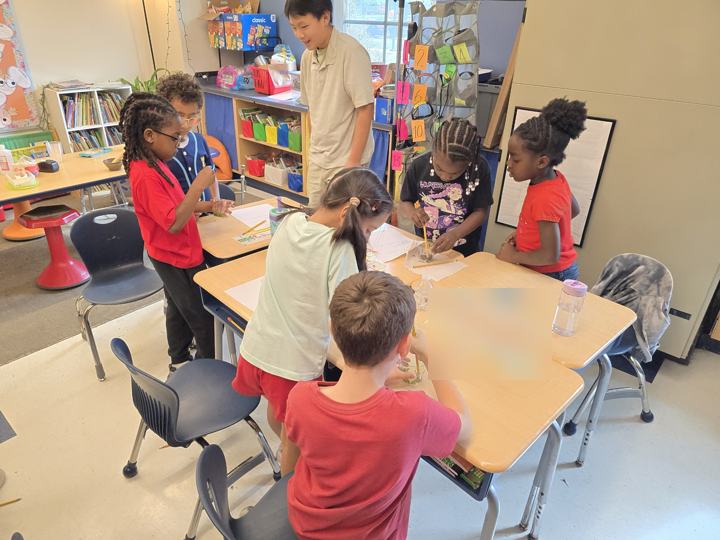
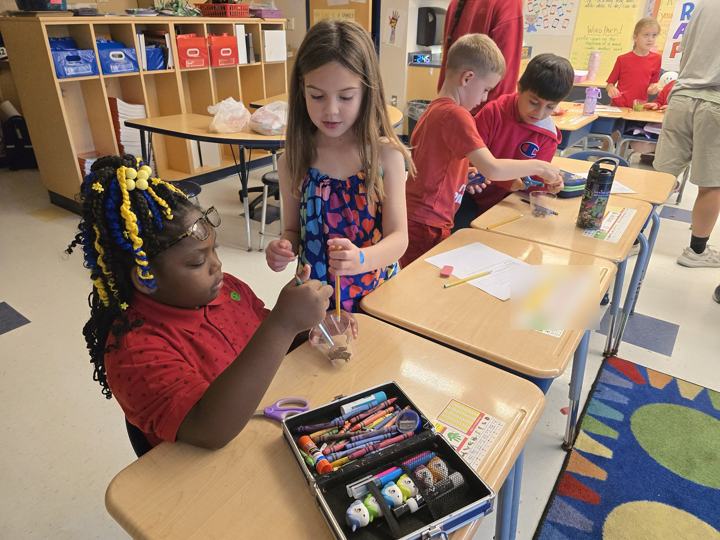
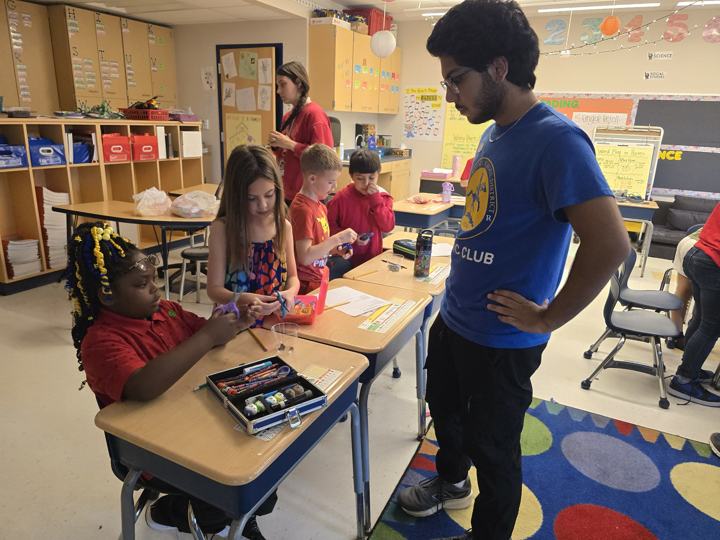
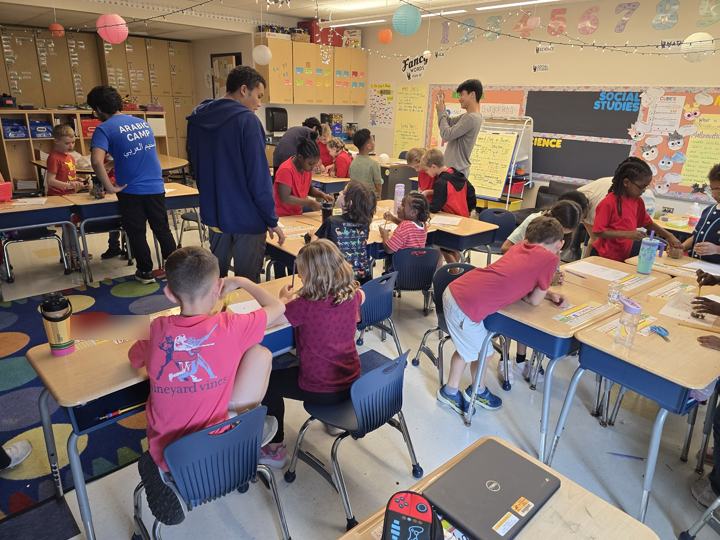
Students crushed leaves, mixed them with rubbing alcohol, and hung strips of paper in the liquid. As the alcohol climbed the paper, the pigments in the leaf traveled different distances and separated into colored bands. This is called paper chromatography.
Before the activity, volunteers explained the idea behind it: the paper holds pigments back while the alcohol pulls them upward, so different pigments end up at different heights. Then students made predictions, ran the experiment, and compared what they saw.